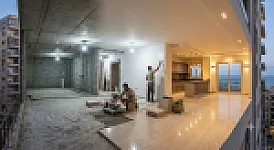


Full Home Renovation
Introduction
Full Home Renovation in Egypt: A Comprehensive Guide
Transform your property with certainty, quality, and expert management.
A complete home renovation is a transformative journey. Whether you are planning residential construction or a full home renovation, expert oversight is required. From solid foundation structure to final handover, this guide covers every critical aspect of properties across Alexandria and the North Coast.
📊 Executive Summary
Undertaking a full home renovation in Egypt is a significant investment. This guide details essential phases, from scope definition to design development. We explore the importance of professional architectural design services and expert construction project management. Additionally, we address logistical challenges and the value of rigorous construction quality control. With ADOMR's 35 years of deep expertise, your project is built on trust.
The Egyptian Renovation Challenge
Renovating an entire property in Egypt presents unique hurdles. From navigating home construction Alexandria permits to managing material supply chains, specialized expertise is required. Issues like outdated wiring necessitate safe electrical services, while aging pipes require modern plumbing services. Furthermore, coastal properties need effective waterproofing insulation to ensure long-term durability against humidity.
Navigating local permits and building codes can be complex and time-consuming.
Fluctuations in the building materials index impact budget predictability for long-term projects.
High demand for specialized tradespeople can lead to scheduling bottlenecks during peak construction seasons.
Older properties often conceal outdated wiring, plumbing, or deteriorated concrete that only emerges during demolition.
Coastal properties require specific materials resistant to humidity and salt air to ensure long-term durability.
Imported finishes and specialized fixtures may face customs or logistics delays, impacting the master schedule.
The market contains varying levels of professionalism, making rigorous vetting and contractual clarity essential.
Access to dedicated renovation financing can be limited, requiring careful cash flow management by the homeowner.
Scope Definition
Establishing clear boundaries and objectives.
Defining the scope of a full home renovation is the foundational step that dictates the entire project's trajectory.
A comprehensive scope definition begins with a detailed property assessment. Whether you are considering residential construction or a major update, evaluating structural integrity is critical. Identifying the need for expert structural repairs early prevents costly mid-project deviations. Unlike partial updates, a full remodel requires a holistic view of the solid foundation structure and all systems. Engaging a professional engineer early is critical. They can identify hidden issues, such as outdated wiring that does not meet current regulations. The scope document should explicitly list every room and area to be addressed. Furthermore, the scope must align with the homeowner's long-term vision. Will the property serve as a primary residence or a seasonal retreat? By establishing a rigid, well-documented scope before any demolition begins, clients and contractors share a unified understanding of the project's boundaries, minimizing the risk of scope creep and ensuring that the final handover meets all predefined expectations.
🎯 Ultimately, a meticulously defined scope acts as the project's blueprint, ensuring that every subsequent decision aligns with the homeowner's vision and structural realities.
Budget and Timeline
Forecasting financial and temporal requirements.
Accurate budgeting and realistic timeline forecasting are the twin pillars of a successful full home renovation.
Developing a renovation budget requires more than a simple estimate of material costs. It must account for design fees, permits, labor, contingency funds, and potential unforeseen structural repairs. Industry data indicates that full home remodels in Egypt frequently experience budget overruns if contingency funds are set below fifteen percent. This buffer is crucial for addressing hidden issues, such as deteriorated concrete or outdated electrical panels, which only become visible once demolition begins. Timeline forecasting must be equally rigorous. A comprehensive renovation typically spans several months, depending on the property's size and the extent of structural work. Securing permits from local authorities can introduce unavoidable delays. Furthermore, the procurement of specialized materials requires lead time that must be factored into the master schedule. Effective contractor management plays a vital role in adhering to both budget and timeline. A transparent, fixed-price contract, coupled with a detailed payment schedule tied to specific milestones, protects the homeowner.
🎯 A robust budget and timeline, fortified by a substantial contingency and rigorous contractor oversight, form the financial and temporal backbone of a seamless renovation.
Design Development
Translating conceptual visions into detailed plans.
Design development transforms abstract ideas into actionable, visually coherent plans.
The design development phase is where the renovation truly takes shape. Engaging professional architectural design services ensures that conceptual sketches evolve into detailed, structurally sound plans. This stage involves selecting the precise spatial layout, which is especially critical when planning a modern kitchen renovation or a luxurious bathroom renovation. Collaboration between the homeowner and engineer is paramount. This stage involves selecting the precise spatial layout, determining the optimal flow between rooms, and specifying all interior and exterior finishes. It is also the optimal time to integrate smart home technologies and energy-efficient solutions, such as improved wall insulation or solar water heating systems, which are increasingly relevant in the Egyptian market. Collaboration between the homeowner, architect, and structural engineer is paramount during design development. Decisions made here directly impact the overall budget and project timeline. Choosing a complex, custom-designed architectural feature may enhance aesthetics but could introduce significant cost and time implications. Therefore, the design must be continuously value-engineered to ensure it remains within the established scope and budget while still delivering the desired quality, functionality, and visual impact.
Spatial Planning
Optimizing room layouts and flow to maximize functionality and natural light within the existing structural footprint.
Material Specification
Selecting durable, climate-appropriate finishes that balance aesthetic appeal with long-term maintenance requirements.
Systems Integration
Seamlessly incorporating modern electrical, plumbing, and HVAC upgrades into the architectural design.
🎯 Thorough design development ensures that every aesthetic and functional choice is viable, compliant, and perfectly aligned with the project's overall objectives.
Material Selection
Choosing durable, climate-appropriate finishes.
Selecting the right materials is a critical decision that impacts the renovation's durability, aesthetics, and overall cost.
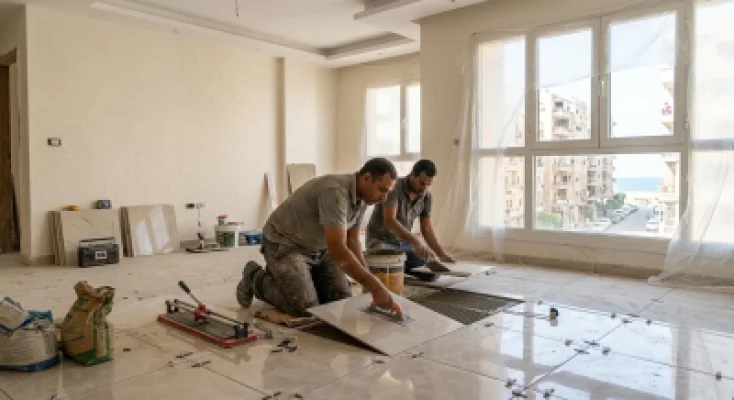
Material selection must be guided by the property's specific environmental conditions. For example, selecting durable flooring tiling services for high-traffic areas ensures longevity. Conversely, private bedrooms might benefit from expert painting decoration services that provide warmth and comfort. The Egyptian building materials market requires careful evaluation of all renovation and finishing options. The Egyptian building materials market has seen significant fluctuations in recent years, making it essential to lock in material choices, specifications, and prices early in the project lifecycle. Local alternatives often provide excellent value, reliable quality, and significantly shorter lead times, while imported materials may offer unique aesthetics but come with higher costs, customs delays, and potential supply chain vulnerabilities. Sustainability is also becoming a key consideration for modern homeowners. Opting for materials with a lower environmental impact, such as those with recycled content or locally manufactured products, not only supports the regional economy but can also contribute to better indoor air quality and long-term energy efficiency. A knowledgeable, experienced contractor can guide homeowners through these complex trade-offs, ensuring that every material choice aligns perfectly with the project's quality standards, aesthetic goals, and budget constraints.
| Material Category | Budget Option | Premium Option | Durability Rating |
|---|---|---|---|
| Flooring | Ceramic Tiles | Porcelain / Natural Stone | 15-25 Years |
| Cabinetry | Laminate / MDF | Solid Wood / Marine Plywood | 10-20 Years |
| Plumbing Fixtures | Standard Chrome | Brushed Nickel / Brass | 20+ Years |
| Paint | Standard Emulsion | Washable / Low-VOC Premium | 7-10 Years |
🎯 Strategic material selection balances aesthetic desires, environmental resilience, and budgetary realities to ensure a lasting, high-quality finish.
System Upgrades
Modernizing electrical, plumbing, and HVAC infrastructure.
Upgrading electrical, plumbing, and HVAC systems is the invisible but vital backbone of any full home renovation.
Older properties often feature outdated wiring that cannot support modern loads, necessitating safe electrical services. Plumbing upgrades are equally critical, requiring modern plumbing services to replace old pipes. HVAC improvements and effective waterproofing insulation dramatically enhance indoor comfort and prevent long-term moisture damage. The execution of these upgrades follows a strict sequence: demolition and rough-in work must be completed and inspected before any walls are closed up. This phased approach ensures that all hidden systems are fully functional and compliant before the visible finishing work begins. Proper planning prevents the need for costly rework and ensures that the home meets all modern safety and efficiency standards.
⏱️ Timeline
🎯 Comprehensive system upgrades guarantee that the renovated home is not only beautiful but also safe, efficient, and built for modern living standards.
Contractor Management
Establishing accountability and clear communication.
Effective contractor management is the linchpin of a successful renovation.
The right partnership transforms a chaotic process into streamlined execution. This requires expert construction project management and rigorous construction quality control at every milestone. Regular, scheduled site meetings ensure that the project adheres to the highest standards of renovation and finishing. Once selected, establish a detailed, legally sound contract that explicitly outlines the scope of work, payment schedule, project timeline, and clear procedures for handling change orders. A fixed-price or guaranteed-maximum-price model is often preferable for homeowners, as it shifts the risk of material price fluctuations and minor inefficiencies to the contractor. Regular, scheduled site meetings are essential for maintaining momentum. These should not be casual, informal check-ins but structured, documented reviews of progress against the master schedule. Document everything meticulously: material approvals, delivery confirmations, and any deviations from the original plan. A professional, reputable contractor will welcome this transparency, as it demonstrates a shared commitment to quality, accountability, and mutual respect.
🎯 Proactive, structured contractor management ensures accountability, minimizes disputes, and drives the project toward a high-quality, on-time completion.
Living Arrangements
Evaluating logistical and health implications.
Deciding whether to live in the property during a full home renovation is a major logistical challenge.
Living on-site during a full renovation is rarely advisable, though it is sometimes chosen for financial reasons. The reality of a comprehensive remodel is that the property will lack basic amenities for extended periods. Dust, noise, and the presence of workers will disrupt daily life significantly. Furthermore, living in a construction zone can slow down the project, as contractors must constantly clean up and secure the site at the end of each day to ensure the occupants' safety. Alternatively, relocating to a temporary residence, such as a rented apartment or a family member's home, offers distinct advantages. It allows the contractor to work uninterrupted, potentially accelerating the timeline. It also protects the homeowner's health and well-being from the inherent hazards of a construction environment, including airborne dust and chemical fumes from paints or adhesives. While relocation adds an expense to the overall project budget, it often pays for itself by preventing delays and reducing the immense stress associated with living through a major renovation.
✅ Pros
- Uninterrupted workflow for contractors, potentially accelerating the project timeline.
- Elimination of health and safety risks associated with living in an active construction zone.
- Significant reduction in daily stress and disruption for the homeowner and family.
❌ Cons
- Additional financial cost for temporary housing, storage, and potential double utility bills.
- Logistical complexity of moving belongings out and back in twice.
- Less direct, daily oversight of the renovation progress and material deliveries.
🎯 Temporary relocation, despite the added cost, is overwhelmingly the safer and more efficient choice for a comprehensive, full-property renovation.
Handling Surprises
Implementing structured protocols for unforeseen issues.
No matter how thorough the initial inspection, hidden issues are an inherent reality of full home renovations.
When walls are opened, previously concealed problems often reveal themselves. This might include the need for expert structural repairs or hidden water damage. The key to handling surprises lies in the contingency fund. Homeowners should also consider the essential questions to ask before starting any major work, and avoid the common mistakes building home owners frequently make during DIY attempts. The key to handling surprises lies in the contingency fund and the formal change order process. A well-planned, realistic budget includes a fifteen to twenty percent contingency specifically reserved for unforeseen structural or systemic issues. When a surprise is uncovered, work in that specific area should pause immediately. The contractor must document the issue comprehensively with photos and provide a detailed explanation of the necessary remediation, along with a precise cost and time estimate. Homeowners should never authorize verbal changes or informal agreements. Every deviation from the original scope must be formalized through a written change order, signed by both parties, before the additional work begins. This disciplined, transparent approach prevents budget blowouts and ensures that the homeowner retains full control over the project's financial trajectory.
Never authorize verbal change orders. Always require written documentation and cost approval before additional work begins.
Maintain a dedicated 15-20% contingency fund specifically for unforeseen structural or systemic issues discovered during demolition.
Hidden issues are not failures of planning; they are inherent characteristics of renovating existing structures, especially older properties.
🎯 A disciplined approach to unforeseen issues, anchored by a robust contingency fund and formal change orders, protects the project's integrity.
Post-Renovation Checklist
Systematic verification of quality and functionality.
The completion of construction work is not the end of the project. A rigorous post-renovation checklist ensures that every detail meets the agreed-upon standards.
The final walkthrough is a critical milestone. It should be conducted systematically, room by room, with the homeowner, the lead contractor, and ideally, an independent inspector or designer. This is the time to verify that all items on the original scope and any approved change orders have been completed to the specified quality. Testing all systems is paramount. Turn on every faucet, flush every toilet, test all electrical outlets and switches, and run the HVAC system to ensure proper operation. Inspect finishes for scratches, uneven paint, or misaligned tiles. Check that all doors and windows open and close smoothly. Equally important is the administrative handover. The contractor must provide all necessary documentation, including warranties for appliances and materials, as-built drawings if structural changes were made, and a final lien waiver confirming that all subcontractors and suppliers have been paid. Only after every item on the checklist is satisfactorily resolved should the final payment be released.
📋 Checklist
🎯 A meticulous final walkthrough and comprehensive administrative handover guarantee that the renovation delivers on its promises, protecting the homeowner's investment.
Differentiating from Partial Renovations
Highlighting strategic value of comprehensive transformation.
Understanding the fundamental differences between a full home renovation and a partial update is crucial for setting realistic expectations.
A partial update, like a single room refresh, lacks the holistic impact of new construction villas or comprehensive remodels. A full renovation unifies design, modernizes all infrastructure, and delivers superior long-term value compared to fragmented updates. In contrast, a full home renovation is a comprehensive transformation. It allows for a unified design vision, where the flow, lighting, and material palette are harmonized across all rooms. More importantly, it provides the opportunity to completely modernize the home's infrastructure. Electrical panels, plumbing lines, and insulation can be upgraded to current standards, significantly improving safety, energy efficiency, and long-term property value. While a full renovation requires a larger initial investment and a longer timeline, the cost-per-square-meter of value added is often higher than that of multiple, disjointed partial renovations. It eliminates the need for future disruptive work, as the entire property is brought up to a consistent, modern standard, ensuring the home is truly done right the first time.
🎯 A full renovation is a strategic investment in the property's holistic integrity, delivering unified aesthetics and modernized infrastructure that partial updates cannot achieve.
Comprehensive Renovation Solutions
Implementing structured, professional methodologies to overcome local renovation challenges and deliver predictable, high-quality outcomes.
A single point of accountability overseeing all trades, permits, and timelines to eliminate homeowner stress.
Guaranteed maximum price models that protect homeowners from material volatility and scope creep.
Strategic sequencing of demolition, rough-ins, and finishing to maintain workflow efficiency and quality control.
Why Standard Approaches Fall Short
Even with good intentions, renovation projects fail when foundational principles of accountability and planning are compromised.
⚠️ Fails when the manager lacks direct, on-site presence and delegates critical decisions to unvetted subcontractors.
⚠️ Fails if the initial scope is poorly defined, leading to excessive change orders that negate the price guarantee.
⚠️ Fails when material procurement is not aligned with the schedule, causing trades to wait and timelines to expand.
Renovation Terminology
Frequently Asked Questions
❓ How long does a full home renovation typically take in Egypt?
A comprehensive renovation generally takes between 3 to 6 months, depending on the property size, extent of structural work, and permit processing times with local authorities.
❓ What is a realistic contingency budget for a renovation?
Industry standards recommend setting aside 15% to 20% of the total project budget as a contingency fund to cover unforeseen structural issues or material price fluctuations.
❓ Should I live in my home during a full renovation?
It is highly recommended to relocate temporarily. Living on-site poses health and safety risks from dust and noise, and it can significantly slow down the contractor's workflow.
❓ How do I choose the right renovation contractor?
Verify their licenses, insurance, and references for similar full-scale projects. Ensure they provide detailed, written contracts and maintain transparent, structured communication.
❓ What is a change order and why is it important?
A change order is a written agreement detailing any changes to the original project scope, including associated costs and timeline adjustments. It prevents budget disputes.
❓ Are permits required for a full home renovation in Alexandria?
Yes, structural alterations and major system upgrades require permits from the Alexandria Urban Development Authority to ensure compliance with local building codes.
❓ How can I ensure the quality of materials used in my renovation?
Specify exact brands, models, and grades in the contract. Conduct milestone inspections before finalizing payments to verify that delivered materials match the specifications.
❓ What is the difference between a full renovation and a partial remodel?
A full renovation transforms the entire property, modernizing all systems and unifying the design, whereas a partial remodel only updates specific rooms without addressing underlying infrastructure.