Waterproofing & Insulation
Introduction
Waterproofing & Insulation
Comprehensive protection for Egyptian properties against moisture and heat
Your ultimate guide to understanding and applying advanced waterproofing and thermal insulation systems in Egypt. We ensure residential construction with unparalleled quality standards through advanced protection systems. We cover roof, bathroom, tank, and foundation waterproofing methods, focusing on energy efficiency solutions and tackling climatic challenges in Alexandria and the North Coast.
📊 Executive Summary
Waterproofing and thermal insulation represent crucial investments that protect Egyptian properties from structural damage and ensure energy efficiency. In an environment characterized by high summer temperatures and coastal humidity, advanced insulation systems become an absolute necessity. By adhering to construction project management in Egypt standards and following quality benchmarks, common issues can be avoided. This comprehensive guide explores various insulation types, from roof and bathroom waterproofing to foundation and tank insulation. It also highlights how to detect early signs of water damage, choose appropriate materials, and understand the fundamental difference between waterproofing and damp-proofing. By following quality standards and relying on specialist contractors, villa and home owners can avoid common pitfalls and ensure a longer lifespan for their properties.
Climatic and Structural Challenges Facing Properties
Buildings in Egypt, especially in coastal areas and the Nile Delta, face a set of challenges that threaten structural integrity.
High humidity in Alexandria and the North Coast affects building walls.
Poor insulation in ground tanks leads to water seeping into foundations.
Large temperature differences between day and night cause cracks.
Soil in some coastal areas contains salts that corrode reinforcing steel.
Lack of rain drainage networks in some compounds causes water pooling on roofs.
Hidden leaks from internal plumbing pipes inside walls.
Using non-compliant insulation materials against Egyptian standards.
Neglecting regular roof inspections allows minor issues to worsen.
Roof Waterproofing: The First Line of Defense
Importance of roof insulation to protect the structural framework from rainwater and heat.
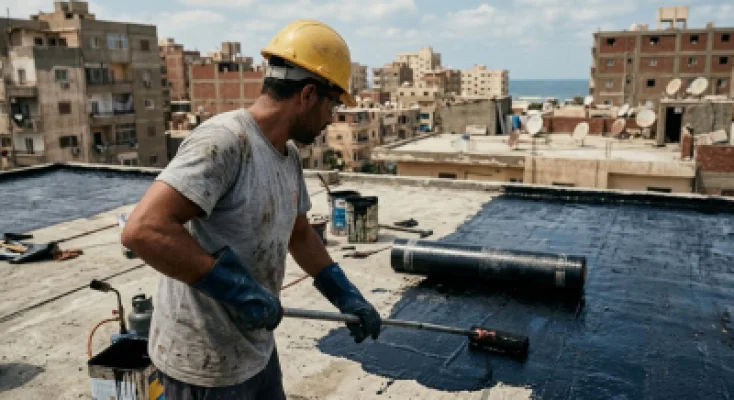
Roofs are the most exposed parts of a building to weather conditions, making them in desperate need of integrated waterproofing and thermal insulation systems.
In Egypt, roofs are subjected to record-high temperatures during the summer, in addition to occasional heavy rainfall in winter, especially in coastal cities like Alexandria. When embarking on new construction of villas and homes, this reality requires the application of strong waterproofing layers, such as treated bitumen or modern polymer membranes, which prevent water from seeping into concrete slabs and protect reinforcing steel from rust. The process is not limited to waterproofing alone; it extends to thermal insulation, which reduces heat transfer to upper floors, thereby lowering air conditioning consumption. Understanding construction materials quality is essential to ensure the longevity of these protective measures. Proper surface preparation, including cleaning dust and treating existing cracks, is critical before applying any insulating layers. This meticulous approach ensures that the building envelope remains intact against harsh environmental factors.
🎯 Investing in professional roof insulation guarantees comprehensive building protection and extends its lifespan for decades.
Bathroom Waterproofing: Crucial Steps to Prevent Leaks
Practical guide to bathroom waterproofing and avoiding water leakage problems to walls and ceilings.
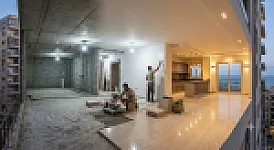
Whether you are undertaking new construction or residential renovation and finishing services, bathroom waterproofing requires extreme precision during the finishing phase.
Any negligence at this stage can lead to the destruction of decorations and damage to the building structure later. Insulation must cover floors and walls up to a height of at least two meters in shower areas. Proper preparation of the substrate is critical. This involves cleaning the surface thoroughly, creating a proper slope towards the drain, and applying a flexible cementitious or acrylic waterproofing coating. It is also vital to reinforce corners and pipe penetrations with specialized mesh to prevent cracking. After application, a flood test must be conducted to verify the integrity of the membrane before any tiling begins. This meticulous approach ensures that moisture does not compromise the structural integrity of the floors below.
📋 Checklist
🎯 Adhering to these steps guarantees a safe bathroom free from moisture and leakage problems.
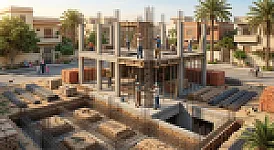
Foundation and Basement Waterproofing: Confronting Groundwater
Comparison between different insulation techniques for foundations to protect the structural framework.
Foundations and basements face constant pressure from groundwater and soil moisture, necessitating the application of construction quality control standards and specialized insulation techniques.
The requirements for foundation insulation differ significantly from those of roofs, as they demand materials capable of withstanding hydrostatic pressure and resisting salts present in the soil. Negative side waterproofing is sometimes used, but positive side application is always preferred when accessible. The choice of material depends on the water table level and soil composition. For instance, crystalline waterproofing is highly effective for concrete structures as it reacts with water to form crystals that seal micro-cracks. Conversely, polymer membranes offer excellent flexibility and chemical resistance, making them ideal for harsh coastal environments. Proper application requires a clean, sound substrate and careful attention to construction joints and penetrations.
| Technique | Advantages | Disadvantages | Best Use |
|---|---|---|---|
| Oxidized Bitumen | Low cost, easy application | Limited flexibility, heat sensitive | Dry areas |
| Polymer Membranes | High flexibility, chemical resistance | Higher cost, needs professional installation | Coastal areas |
| Crystalline Cementitious | Self-healing cracks, long-lasting | Requires very clean concrete surface | Deep tanks and foundations |
| Epoxy Coatings | High water and pressure resistance | Rigid, does not tolerate structural movement | Retaining walls |
🎯 Selecting the appropriate technique depends on the soil nature and groundwater level at the construction site.
Thermal Insulation: Energy Efficiency and Indoor Comfort
The impact of thermal insulation on energy consumption and the indoor environment of buildings.
Thermal insulation plays a pivotal role in achieving thermal comfort inside buildings and reducing monthly electricity bills.
In the Egyptian climate, where summer temperatures often exceed 40 degrees Celsius, uninsulated walls and roofs act as heat collectors, transferring warmth indoors. Thermal insulation is an integral part of luxury finishing and villa finishing services for modern properties, as it contributes to creating a comfortable environment. By reflecting or absorbing heat before it penetrates the building envelope, these systems significantly reduce the cooling load on HVAC systems. This not only lowers operational costs but also minimizes the carbon footprint of the property. Furthermore, proper insulation prevents thermal bridging, which can lead to condensation and mold growth on interior surfaces.
🎯 Thermal insulation is not a luxury, but an economic and environmental necessity.
Signs of Water Damage: How to Detect Problems Early?
Visual guide to recognizing warning signs of water leaks.
Early detection of water leaks saves thousands of pounds and prevents the escalation of structural damage.
Property owners should conduct periodic inspections to monitor any abnormal changes in walls or ceilings. The appearance of moisture spots requires repairing the insulation before starting expert interior and exterior painting services to avoid peeling. Ignoring these early indicators can lead to severe structural degradation, requiring extensive and costly repairs. Regular visual checks, especially after heavy rainfall, are a simple yet effective preventive measure.
Moisture spots
Appearance of yellow or brown stains on ceilings and walls, especially after rainfall.
Peeling paint
Swelling and peeling of paint or putty layers due to walls becoming saturated with water from the inside.
Mold odor
Emission of unpleasant smells resembling dirt or mold, indicating trapped moisture.
Cracked tiles
Lifting or cracking of floor tiles due to water leaking from underlying drainage pipes.
🎯 Do not ignore any of these signs, and call a specialist immediately.
Choosing Insulation Materials: Pros and Cons
Objective evaluation of the most common insulation materials used in the Egyptian market.
The success of the insulation process largely depends on paying attention to understanding construction materials quality and selecting the right material for the surface nature and surrounding climatic conditions.
Insulation materials in the Egyptian market vary between traditional and modern options, each with its unique characteristics. Bitumen remains a popular choice due to its affordability, while polyurethane offers superior thermal and waterproofing properties in a single application. Acrylic coatings provide excellent flexibility for irregular surfaces, and foam boards are lightweight, adding minimal structural load. However, each material has its drawbacks that must be weighed against the specific requirements of the project.
✅ Pros
- Bitumen: Economical and widely available in the local market.
- Polyurethane: Provides both waterproofing and thermal insulation in a single layer.
- Acrylic: Flexible and easy to apply on irregular surfaces.
- Foam: Lightweight and does not add extra loads to the structural framework.
❌ Cons
- Bitumen: Affected by UV rays and requires a protective layer.
- Polyurethane: Higher initial cost and requires trained labor.
- Acrylic: Does not withstand high water pressure or continuous submersion.
- Foam: Flammable unless treated with fire-retardant materials.
🎯 Engineering consultation helps in choosing the most suitable material for your budget and building nature.
Common Problems in Egyptian Homes
Analysis of the most widespread insulation errors and how to avoid them.
Many homes suffer from common mistakes to avoid when building, resulting from poor execution or the use of substandard materials.
These problems lead to the depletion of maintenance budgets and a reduction in the property's market value. Ignoring proper waterproofing during the initial construction phases often results in costly repairs later. For example, failing to properly seal construction joints or using sea sand in mortar can accelerate the corrosion of reinforcing steel. Additionally, inadequate roof slope can cause water pooling, which eventually breaches the waterproofing membrane. Addressing these issues requires a proactive approach to construction quality control and adherence to established building codes. This is particularly crucial for villa renovation in Alexandria initiatives, where older structures require careful assessment.
🎯 Awareness of these problems is the first step to avoiding them during construction or renovation.
Preventive Maintenance Schedule for Insulation
A timeline for maintaining the efficiency of insulation systems for the longest possible period.
Periodic maintenance must be an essential part when you plan your villa construction to ensure the longevity of insulation systems and avoid costly repairs.
Adhering to a scheduled inspection guarantees the discovery of any minor damages before they turn into disasters. Regular cleaning of gutters, checking for membrane blisters, and reapplying protective coatings are vital tasks. This proactive approach not only preserves the structural integrity of the building but also maintains its aesthetic appeal and market value. It also complements any future painting and decoration services by providing a stable substrate.
⏱️ Timeline
🎯 Make preventive maintenance an annual habit to protect your real estate investment.
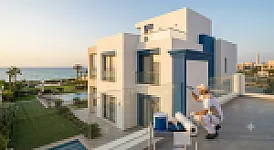
Insulation Requirements in Coastal Areas
Why do Alexandria and the North Coast require special insulation specifications?
The coastal environment imposes unique challenges, especially in coastal and Sahel projects, requiring insulation materials resistant to salinity and high humidity.
The composition of air and soil in coastal areas differs from inland regions, necessitating the use of special chemical additives. Standard materials may degrade rapidly when exposed to salt-laden winds and moisture. Therefore, specifying marine-grade insulation products is crucial for long-term durability. The coastal environment imposes unique challenges, especially in coastal and Sahel projects, requiring insulation materials resistant to salinity and high humidity.
Warning: Using traditional insulation materials non-resistant to salts in areas like Alexandria and the North Coast leads to insulation failure within less than 3 years due to chemical corrosion.
Technical vision: Relying on polymer membranes treated with antioxidants and salts ensures a lifespan exceeding 20 years in harsh coastal environments.
Executive tip: Always ensure adding a moisture-insulating layer at a height of at least 30 cm above the external ground level to prevent capillary salt rise.
🎯 Customization based on geographical location is the true standard of quality.
Difference Between Waterproofing and Damp-Proofing
Clarifying the fundamental differences between the two concepts to ensure correct usage.
Many people confuse waterproofing and damp-proofing, although each has a completely different function and application.
The misunderstanding of these two concepts leads to the use of inappropriate materials, causing rapid system failure. Waterproofing is designed to stop liquid water under pressure, while damp-proofing only resists moisture vapor in the absence of hydrostatic pressure. Correct understanding protects your investments and ensures you reach the level of luxury finishing and durability.
🎯 Correct understanding protects your investments and ensures you reach the level of luxury finishing and durability.
Advanced Solutions and Modern Insulation Systems
An overview of global technologies that can be localized in the Egyptian market.
Technology relying on a chemical reaction that generates crystals to seal micro-pores in concrete.
Spraying fast-drying polymer layers that form a seamless membrane.
Coatings containing reflective ceramic granules for ultraviolet rays.
Challenges of Applying Global Solutions Locally
Reasons why some advanced technologies fail when applied in the Egyptian environment.
⚠️ Incorrect application on unclean surfaces or the presence of wide structural cracks prevents effective crystal formation.
⚠️ High cost of equipment and trained labor, in addition to the material's sensitivity to temperature and humidity during spraying.
⚠️ Rapid accumulation of dust and sand on painted surfaces causes them to lose their reflective property and significantly reduces their efficiency.
Waterproofing and Thermal Insulation Terms
Frequently Asked Questions About Insulation
❓ What is the best time to apply waterproofing during construction?
One of the key questions to ask before starting construction is determining the best time for waterproofing, which is after concrete pouring and crack treatment, before plastering or tiling, to ensure early structure protection.
❓ Can waterproofing be done over old tiles?
Yes, there are transparent or flexible cementitious insulation materials that can be applied over ceramic, but it is preferable to remove damaged tiles and treat the base to ensure long-lasting results.
❓ How long does it take to insulate a complete roof?
It depends on the area and the material used, but it usually takes 3 to 5 days, including preparation, application, and flood testing to ensure quality.
❓ What are the signs of tank waterproofing failure?
A drop in the water level in the tank without consumption, the appearance of moisture or salts on the external walls surrounding the tank, or a change in the taste and color of the water.
❓ Does thermal insulation really reduce electricity bills?
Absolutely, thermal insulation prevents heat transfer from the outside, reducing the effort exerted by air conditioning units by up to 40%, which positively reflects on the bill.
❓ How do I choose a reliable insulation contractor?
Look for contractors who know what to look for in a villa builder, and have documented previous work using materials compliant with Egyptian standards.
❓ What is the difference between positive and negative insulation?
Positive insulation is on the same side as the water source (like insulating the roof from above), while negative is from the opposite side (like insulating the basement ceiling from inside), and positive is always better.
❓ Do salts affect insulation materials?
Yes, salts present in the soil or seawater cause chemical corrosion to some insulation materials, so chemical-resistant materials must be used in coastal areas.